
By North Shore Tree Loppers | Fully Insured | Serving the Entire North Shore
Let’s talk about the tree situation on Sydney’s North Shore, shall we? Because it’s not quite like anywhere else in Australia.
You’ve got Ku-ring-gai — one of the strictest councils in the country when it comes to protecting its urban canopy. You’ve got North Sydney, Lane Cove, Mosman, and Willoughby, all with their own specific rules, their own protection thresholds, and their own preferred paperwork. You’ve got blocks full of established eucalypts, magnificent Moreton Bay figs, towering spotted gums, and the occasional liquidambar that turns breathtaking in autumn before deciding to drop its entire leaf load into your gutters in one weekend.
And you’ve got a lot of homeowners who’ve discovered — occasionally the expensive way — that doing something about a problem tree without understanding the rules first is a very fast path to a very uncomfortable conversation with a council inspector.
This guide cuts through all of it. What the North Shore council rules actually allow, what tree removal and stump grinding genuinely costs in 2026, what the process involves from assessment to cleanup, and how to get it done safely, legally, and without blowing your budget.
North Shore Council Tree Rules: What You Actually Need to Know
The North Shore is served by five separate councils — Ku-ring-gai, North Sydney, Lane Cove, Willoughby City, and Mosman — and each has its own specific tree protection framework. Here’s the practical breakdown of what matters most.
Ku-ring-gai Council: The Strict One
There’s no polite way to say it: Ku-ring-gai is one of the most protective councils in NSW when it comes to its tree canopy, and for good reason. The leafy streets of Pymble, Wahroonga, Turramurra, St Ives, Gordon, and Killara are part of what makes these suburbs so desirable — and the council takes that seriously.
What needs a permit: Trees over 5 metres in height, or with a trunk circumference of more than 150mm measured one metre from the ground. This catches a wider range of trees than most homeowners expect — many ornamentals that look “medium-sized” qualify as protected.
What you can do without a permit: Trees under 5m height with a trunk diameter less than 150mm at ground level. Trees within 3 metres of an existing dwelling wall (not garages, carports, or sheds — just the main dwelling). Branches directly overhanging the roofline of a residence, pruned back to the nearest branch junction. Dead trees, provided council is satisfied they’re not providing habitat value.
Ku-ring-gai’s exempt species list is useful — the council has designated certain species as local pests that can be removed regardless of size without any permit. These include Cocos Palm, African Olive, Liquidambar, Rubber Tree, Coral Tree (all varieties), Box Elder, Privet, Cotoneaster, Loquat, and a number of others. Correct species identification matters here — an exemption that’s applied to the wrong species is no exemption at all.
Application fees for Ku-ring-gai are $88 for tree removal and $44 for pruning (pensioner discounts available). Applications typically take 4–6 weeks for assessment, and the council requires replacement planting at ratios of 2:1 or higher for approved removals.
North Sydney, Lane Cove, Willoughby & Mosman Councils
These four councils each have their own specific thresholds and exempt species lists. North Sydney protects trees with trunk diameters exceeding 300mm (measured one metre above ground) and any tree forming part of a group canopy. Mosman Council places strong emphasis on retention over removal and requires detailed arborist reports for most applications. Lane Cove and Willoughby sit at similar protection thresholds to Ku-ring-gai.
The universal principle across all five North Shore councils: when in doubt, check before you cut. The fine for unlawfully removing a protected tree in NSW has been documented exceeding $10,000 for individuals in recent enforcement actions — and that’s before any council-mandated remediation or replacement planting costs.
Using a qualified arborist who knows your specific council’s current rules isn’t just good practice — it’s the cheapest possible insurance against an outcome nobody wants.
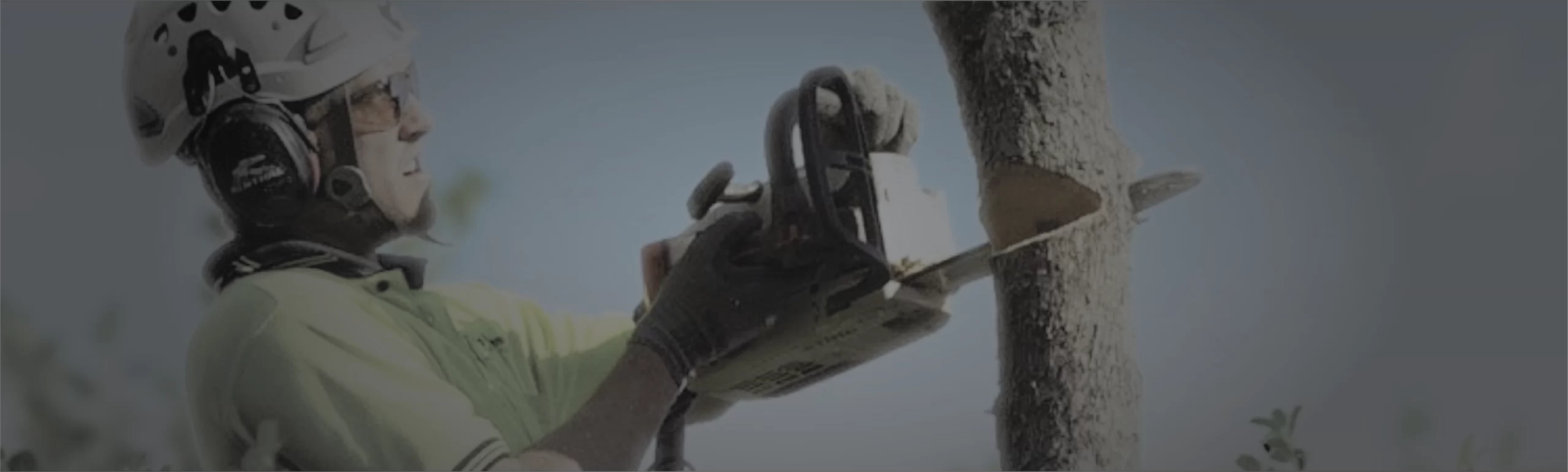
How to Remove a Tree on the North Shore: The Step-by-Step Process
Once you’ve confirmed the tree is exempt from permits or your council approval has come through, here’s what a professional tree removal actually involves on a typical North Shore residential property.
Stage 1: On-Site Assessment
A qualified arborist — minimum AQF Level 3 certification under Australian Standards AS 4373-2007 — inspects the tree, the site, and surrounding structures. They’re assessing structural integrity, root system spread, access for equipment, proximity to power lines and buildings, and the safest removal method.
This assessment determines everything that follows: the crew size, the equipment needed (cherry picker, crane, or climbing team), and whether the job requires a single day or multiple days. North Shore Tree Loppers provides free on-site assessments — the only way to give an accurate, reliable quote.
Stage 2: Crown Removal — Sectional and Top-Down
The dense residential character of North Shore suburbs — tight backyards, sandstone retaining walls, neighbouring properties within metres, pools, carefully maintained gardens — means that felling trees in one piece is rarely an option. Instead, climbing arborists remove the crown section by section from the top downward.
Each section is controlled with rigging ropes and lowered carefully rather than dropped — protecting your fence, your neighbour’s property, and anything below the tree line. For larger trees in confined spaces, cranes are sometimes deployed to safely lift and swing heavy sections clear of surrounding structures.
This is the step that separates trained, insured arborists from the bloke with a chainsaw who quoted you $400 on Facebook. Rigging a 12-metre gum tree out of a tight Mosman backyard is not a casual Saturday project.
Stage 3: Trunk Removal
With the crown cleared and confirmed safe, the trunk is cut in manageable sections from the top down. For open-access sites, the lower trunk sections can often be felled directionally — faster and cheaper. For the hedge-lined, fence-tight properties typical of Neutral Bay, Artarmon, and Chatswood West, sectional cutting continues to ground level.
Stage 4: Chipping and Site Cleanup
All removed canopy material is fed through an industrial chipper. Timber logs can be left for firewood if you want them — particularly worthwhile from dense hardwoods like spotted gum or ironbark. The resulting wood chip mulch can be left on garden beds (genuinely excellent for moisture retention and weed suppression) or removed from site completely, depending on your preference.
A professional crew leaves your property clean. You shouldn’t be finding stray branches or sawdust piles a week later.
Stump Grinding on the North Shore: Process, Cost & Why It Matters
This is the part of North Shore tree removal that homeowners most commonly defer — and most commonly regret deferring.
That stump sitting level with the lawn might look benign. But it’s a termite habitat, a tripping hazard, a regrowth platform for species that will absolutely shoot back from the root system (figs and camphor laurels in particular), and an obstacle that affects everything you might want to do with that patch of garden going forward.
How Stump Grinding Works
Professional stump grinding uses a rotating carbide-tipped cutting wheel to grind the stump progressively below ground level — typically 200–300mm deep, sometimes more depending on the root system and what you plan to put in that spot afterwards. The process leaves a pile of wood chip and soil mix that can be raked back into the void and levelled, ready for planting or turf.
For stumps in confined spaces — against fences, in narrow side passages, inside raised garden beds — compact walk-behind grinding machines can access areas that a truck-mounted grinder simply can’t reach. Having the right equipment for the specific site matters.
Stump Grinding Cost on the North Shore in 2026
Stump grinding in Sydney typically runs $80–$350+ per stump based on stump size. More specifically for the North Shore in 2026:
Small stump (under 300mm diameter): $80–$200
Medium stump (300–600mm diameter): $200–$450
Large stump (over 600mm diameter): $450–$800+
Access-restricted stumps requiring hand-portable equipment in tight spaces: add 30–50% above standard rates.
The smart approach: include stump grinding in your original tree removal quote rather than treating it as a separate job. Mobilisation costs are already absorbed in the primary job, making combined pricing consistently more economical.
Tree Trimming and Pruning North Shore: Getting It Right
Not every tree situation requires removal. For the many North Shore homeowners with large, healthy, protected trees that are overhanging structures, blocking views, or simply getting too big for the space — professional trimming and pruning is both more affordable and more compliant with council preservation priorities.
Crown lifting raises the lower canopy to improve clearance over driveways, garden beds, and structures — without reducing overall tree size.
Crown reduction reduces the overall size of the canopy through targeted cuts to lateral branches, maintaining the tree’s natural form while managing its spread and height within council pruning limits.
Deadwood removal eliminates dead, dying, or structurally compromised branches from the canopy — critical safety work, particularly for the large eucalypts that are characteristic of the upper North Shore. A “widow-maker” branch hanging in the canopy of a spotted gum is not a “we’ll get to it eventually” situation.
Best timing for North Shore pruning: Late winter to early spring before the growing season flush is optimal for structural pruning of most species. Native eucalypts can be pruned year-round but respond best to timing that allows rapid wound closure. Avoid summer pruning for most species — heat stress and slow healing make it the worst window for anything beyond genuine safety work.
Pruning costs on the North Shore: Crown reduction typically falls in the $800–$1,800 range for a standard residential tree on the North Shore, with full project totals moving into $950–$3,000+ once access, log removal, and green waste removal are factored in.
Tree Mulching and Woodchipping: The Free Garden Upgrade
Here’s one of the most underused benefits of professional tree work: the timber that comes off your trees doesn’t have to be taken away. Tree mulching and woodchipping converts all removed canopy material into fresh organic wood chip — one of the best garden mulches available.
Applied at 75–100mm depth across garden beds, fresh wood chip suppresses weeds effectively, retains soil moisture through Sydney’s dry summer months, moderates root zone temperature, and adds organic matter progressively as it breaks down. For North Shore gardens with established native plantings, sandstone-edged terraced beds, or ornamental gardens that lose moisture quickly on sloped blocks, this is genuinely valuable material.
You can also ask us to leave specific logs for firewood before the chipper starts — just mention it during the quote. Dense hardwoods from North Shore native species make excellent firewood and would otherwise go through the machine.
Land Clearing on the North Shore: Development, Renovation & New Gardens
For larger-scale projects — clearing for new builds, subdivision development, major landscaping renovations, or removing extensive overgrown vegetation — land clearing on the North Shore involves a different scale of planning and compliance than single-tree removal.
Land clearing almost always requires a Development Application rather than a simple tree permit across North Shore council areas. The Ku-ring-gai DCP Part 13 — Tree and Vegetation Preservation — is particularly detailed about the evidence required for large-scale clearing proposals, including ecological assessments for properties near bushland corridors.
Getting the approval sequence right before any earthmoving or clearing begins is essential. A stop-work order on a development site is expensive in ways that make permit application costs look trivial.
We work with clients through the council application process, coordinate with environmental consultants where biodiversity assessments are required, and handle the clearing work in compliance with any DA conditions once approval is in place.
Emergency Tree Services: Because Storms Don’t RSVP
A major summer storm across the North Shore — and there are plenty of them — can put a perfectly healthy-looking tree in a position it wasn’t in two hours ago. Split leaders, failed scaffold branches, partially uprooted root balls, and whole trees leaning against structures are emergency situations that need qualified response, not a YouTube tutorial.
24/7 emergency tree services on the North Shore cover exactly these scenarios. For genuine safety hazards, removal can proceed without prior council approval — but a qualified arborist must document the hazard condition in writing, and council notification may be required retrospectively.
Two things worth knowing before you need this service: First, call the SES (132 500) for life-threatening situations — they secure the immediate scene. Then call us for the tree work. Second, take dated photos of the damage as soon as it’s safe to do so. That documentation matters for both council notification and any insurance claim.
Have our number saved in your phone before storm season starts. It’s a much better plan than finding it at midnight.
Garden Services That Complete the Picture
Tree work and garden work are natural partners — once a tree comes out, the garden around it often needs attention. Our gardening services on the North Shore complement every tree job we do, from basic cleanup and replanting to more involved garden renovation.
Whether it’s replanting a cleared area with native species that council may require as part of a removal permit condition, renovating an overgrown garden revealed once a problem tree is gone, or general ongoing maintenance — one team, one call, one consistently tidy outcome.
Tree Removal Cost on the North Shore: 2026 Honest Price Guide
Here’s what tree removal genuinely costs across North Shore suburbs in 2026, based on current market data:
Small tree (under 5m) — ornamental, small palm, young gum: $300–$850
Medium tree (5–10m) — established Jacaranda, mid-sized native, mature Lilly Pilly: $850–$2,500
Large tree (10–15m) — significant Eucalypt, large fig, substantial Camphor Laurel: $2,500–$5,500
Extra-large or crane-required removal (15m+, near structures, restricted access): $5,500–$15,000+
What pushes quotes higher on the North Shore specifically:
- Tight site access — the narrow side gates and sandstone retaining walls of Mosman, Neutral Bay, and Artarmon require hand-carry of all equipment
- Power line proximity — working near energised lines adds substantial safety requirements and sometimes a separate provider for line clearance
- Two-storey neighbour proximity — rigging work over neighbouring properties requires additional planning and sometimes liaising with adjacent owners
- Council permit costs — $88–$300 depending on council and tree significance, plus arborist report costs of $350–$900 for permit applications
- Crane hire — for trees over structures in tight sites; add $800–$3,000+ depending on duration
The value of a written, itemised quote: Always confirm what’s included — is stump grinding in the price? What about wood chip removal or log splitting? A quote that just says “tree removal — $X” doesn’t tell you whether you’re getting a full-service job or a cut-and-leave outcome.
Why North Shore Homeowners Choose North Shore Tree Loppers
We work exclusively on the North Shore. Not “Sydney-wide” with a North Shore office — the North Shore, full stop. That means we know Ku-ring-gai’s exempt species list. We know which suburbs in the Lane Cove LGA have additional protections. We know how to rig a large gum tree out of a tight Wahroonga backyard without touching the neighbouring fence.
We’re fully insured, our arborists hold the required qualifications, and we provide written quotes that spell out every element of the scope before any work begins. No surprises on the invoice.
Get in touch with North Shore Tree Loppers for a free on-site assessment and written quote. Your trees — and your council compliance — are in safe hands.
North Shore Tree Loppers provides tree removal and cutting, tree trimming and pruning, stump grinding, land clearing, tree mulching, emergency tree services, and gardening across all North Shore suburbs including Ku-ring-gai, North Sydney, Lane Cove, Willoughby, and Mosman council areas. Fully insured. Free on-site quotes.